
Brand Worldbuilding: What Makes Us Believe?
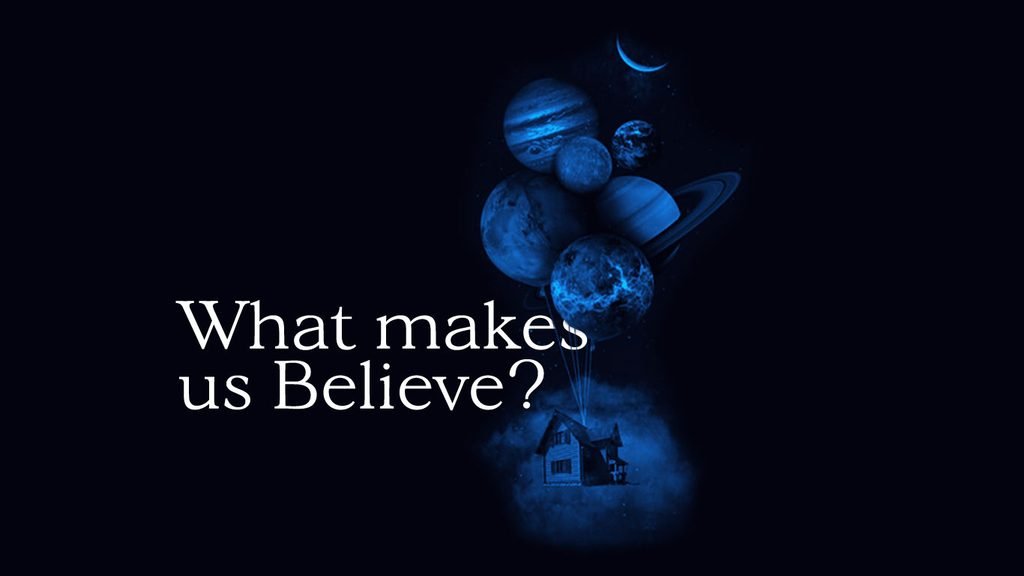
What makes us believe in something impossible? Pixar knows the answer. Perhaps brands can learn something from the worlds we already believe in. A house lifts off the ground with hundreds of balloons. We know it is impossible. And yet, when it happens in Up, we do not stop the story to object. We watch. We worry. We hope the house makes it. For a while, we believe. That is one of the strange powers of a well-built world. Pixar understands this exceptionally well. It can ask us to believe that toys have secret lives, that monsters have office jobs, that emotions have personalities, that fish can cross entire oceans, that a house can fly. None of these things are real. But they make sense. And that distinction matters. . The impossible does not need to be realistic It needs to be coherent. A world does not become believable because everything in it resembles our own. It becomes believable because we understand, even intuitively, how things work there. Toys behave according to one set of rules. Monsters according to another. Emotions have their own logic. Once the rules are established, the world can become extraordinarily strange without feeling random. That is the trick. Pixar does not spend its time convincing us that toys are actually alive. It gives us enough evidence to accept that, in this world, they are. And then it moves on. No argument required. . Belief is not the same as agreement This is where things get more interesting. When we believe in a world, we do more than understand it. We participate in it. We become emotionally invested in what happens there. We recognize ourselves in it. We assign meaning to things that, outside that world, might mean very little. A lamp. A toy. A house. A red balloon. They become something else because the world around them gives them meaning. That is what coherent worlds do. They turn isolated elements into a system. And systems are much easier to believe than collections of things. . Now imagine doing that with a brand Not making a brand look like a fictional universe. Something more fundamental. What if a brand had enough internal coherence that people could understand not only what it says, but how things behave inside its world? Its language. Its visual identity. Its spaces. Its products. Its rituals. Its people. Its choices. Its silences. Not as separate expressions of the same logo. As parts of the same world. That changes the question. Instead of asking: “Does this brand have a strong identity?” We might ask: “Does this brand have a world that holds together?” Because a world can make people believe things that a message alone cannot. Maybe: This place is different. People like me belong here. This is the kind of person I could become. This means something. I want to be part of this. Those are not really statements about a logo. They are acts of belief. . The world comes first Or perhaps more precisely: The logic comes first. Before the beautiful details. Before the campaign. Before the perfectly chosen words. There has to be something underneath them that makes them inevitable. Otherwise, even beautiful things can feel strangely disconnected. A voice that changes depending on the channel. A ritual that exists only because it looks good. A space that tells a different story from the product. A visual identity that promises something the experience cannot sustain.Nothing is necessarily wrong with any individual piece. The problem is that they do not belong to the same world. And people notice.Sometimes consciously. Usually not. They simply stop believing. . Perhaps that is the real power of worldbuilding Not making people believe that something impossible is real. Making them believe that it could be real here. That is a much more interesting kind of belief. Because once people believe in the world, they begin to do something else. They enter it. They participate. They bring their own meaning. And eventually, they may not even remember where the world ended and their experience of it began. That is when a collection of elements becomes something larger. A world. And every world, no matter how beautiful, has rules. Even the ones pretending they don’t. The interesting part is finding out what they are. Because if your world has no rules, what exactly are people believing in? . We trust you Brand Strategist • Worldbuilder • Occasional troublemaker For more than two decades, she has been building brands, worlds, and making sense of things that refused to make sense. She works at the intersection of strategy, narrative, identity and experience. She firmly believes complexity is not the enemy. Unnecessary complexity is. When she is not building worlds, she is probably taking one apart to understand how it works. Founder of Arcane Studio and, apparently, responsible for most of what happens around here. The rest is classified.